


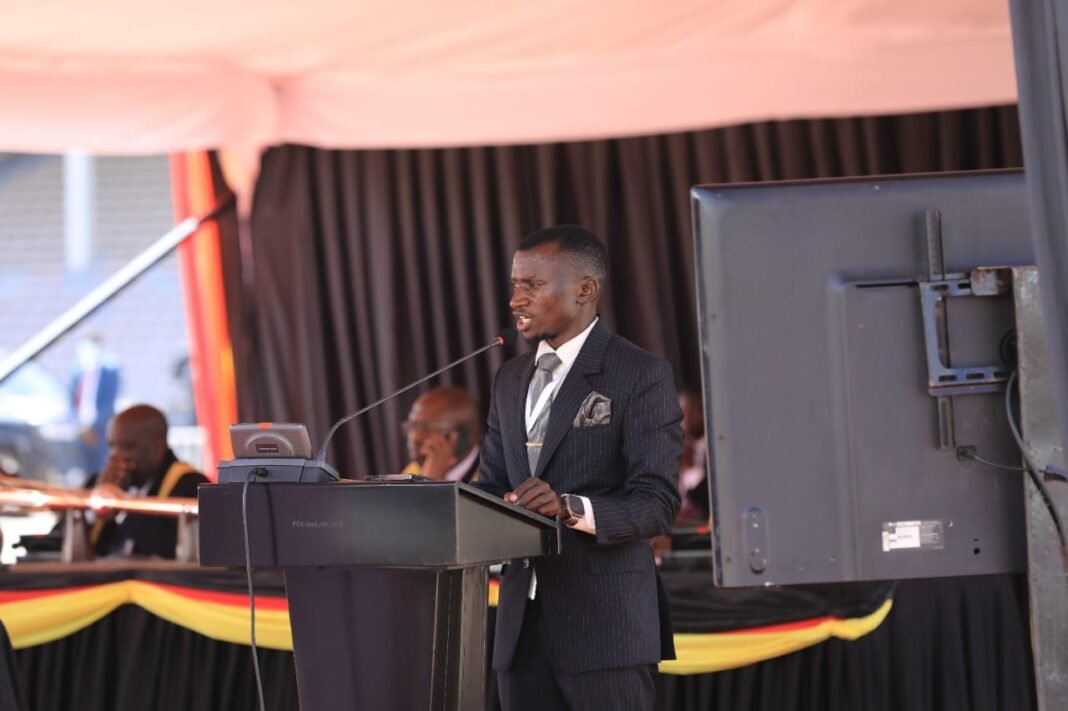
The early stages of the Deputy Speaker election in the 12th Parliament were marked by a brief procedural twist after an attempted nomination failed to progress due to lack of support on the floor.
Hon. Yusuf Kiruluuta Junior Nkerettanyi, MP for Kalungu East (NUP), rose to nominate Hon. Godfrey Aine Kaguta (Mawogola North) for the Deputy Speaker position.
However, the attempt collapsed immediately after no Member of Parliament came forward to second the nomination, a requirement under parliamentary standing orders that renders any candidacy invalid if not fulfilled.
The moment highlighted the strict formality governing parliamentary leadership elections, where nominations are only considered valid if both a proposer and a seconder are present and recorded.
In contrast, the nomination of Hon. Thomas Tayebwa proceeded without procedural obstacles. His bid was formally moved by Nebbi District Woman MP Phiona Nyamutoro and seconded by Buvuma Islands MP Robert Migadde, allowing his name to stand in the official race for Deputy Speaker.
The contrasting outcomes underscore the importance of coordination and political alignment in parliamentary contests, where even a nominated name cannot advance without visible backing in the chamber.
While some nominations in such races are viewed as symbolic political gestures or attempts to test parliamentary mood, they still must satisfy formal requirements before being recorded in the official proceedings.
As the 12th Parliament continues to organize its leadership structure, the Deputy Speaker election is emerging as an early indicator of bloc strength, discipline, and influence within the House.


