


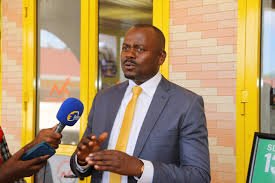
State Minister for Finance Haruna Kasolo explains the NRM’s comeback in Buganda, citing the opposition’s failure to deliver on promises and his own successful mobilisation strategies. He also touches upon the party’s relationship with the Catholic Church and defends the integrity of the electoral process.
Haruna Kasolo, the outgoing State Minister for Finance in charge of Microfinance and Small Enterprises, has attributed the ruling NRM party’s renewed strength in the Buganda region to several key factors. Following his victory in the Kyotera County by-election, Kasolo, who previously lost his seat in 2021, believes that voters returned to the NRM after the opposition failed to deliver on their campaign promises.
Kasolo contends that the 2021 election wave, which saw many NRM ministers lose their seats in Buganda, was a strategic signal from voters. He posits that this was an attempt to challenge President Museveni in a region where he was perceived as strongest, rather than a reflection of poor performance by the ministers themselves. “We had really served our people diligently,” Kasolo stated, adding that voters eventually realized the opposition’s unfulfilled pledges.
He also addressed accusations of rigging, asserting that his success stemmed from “mastered mobilization skills” as the Vice Chairperson of the NRM’s central region. Kasolo clarified his remarks regarding the Masaka City Woman Representative slot, explaining that his reference to President Museveni was in his capacity as NRM party chairperson, tasked with ensuring the party’s strength and principles were upheld, particularly concerning uncaptured polling station results.
On the matter of the NRM’s popularity in Buganda, Kasolo expressed confidence, stating that the region houses a diverse population with varied ideas, contributing to the party’s broad appeal. He dismissed notions of ethnic undertones in his victory for the NRM vice chairperson position in Buganda, emphasizing that Buganda itself is a confluence of many ethnic groups. Kasolo also downplayed the influence of the Catholic Church in political outcomes, suggesting that any perceived opposition from religious institutions was likely the action of a few individuals rather than a collective stance.
Regarding campaign resources, Kasolo remains unfazed by accusations of excessive spending, challenging accusers to present evidence in court and attributing his victory to strategic capitalization on his opponent’s unfulfilled promises. He believes voters could easily compare the service delivery records of both candidates.
This interview offers insights into the NRM’s internal perspective on their electoral performance in Buganda and the broader political landscape of the region.


