


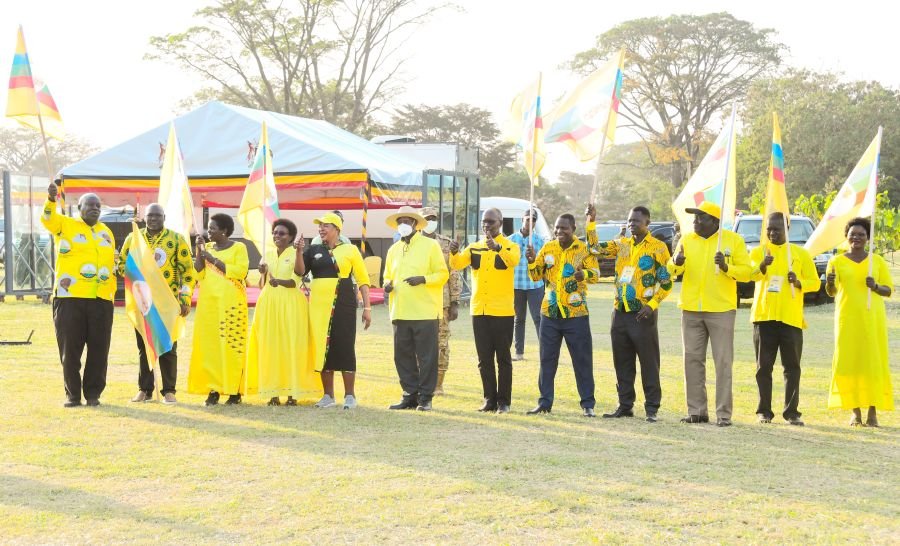
President Museveni has held his second campaign rally of the day in Lira City, where he emphasised that peace—the first major contribution of the National Resistance Movement (NRM) government—is the foundation of Uganda’s development and warned against any attempts to destabilise the country.
Addressing a large crowd, President Museveni said Uganda’s progress in infrastructure, energy, agriculture and industry has only been possible because of the peace ushered in by the NRM.
“Peace is the foundation of everything. No one should dare disturb Uganda’s peace,” he said, noting that before the NRM came to power, the country was plagued by political instability, cattle rustling and widespread insecurity.
Museveni Defends NRM Legacy as he Rallies Nakawa Voters on Wealth Creation
Kateregga Seeks EC, Security Intervention Over Electoral Violence in Bukomansimbi North
He explained that development is the second key contribution of the NRM, citing the construction of Mandela National Stadium (Namboole). According to the President, the Chinese had offered to build the stadium as early as 1968, but the project could not proceed due to insecurity at the time.
“Because of the peace brought by the NRM, we were able to build Namboole and other stadiums such as Akii-Bua Stadium here in Lira, Hoima Stadium, and undertake major projects like Karuma Hydropower,” he said, adding that government plans are underway to construct additional power plants, including Ayago.
President Museveni also highlighted Uganda’s oil discovery, noting that although British explorers attempted to search for oil as early as the 1920s, it was only under a peaceful environment and with modern technology that Uganda successfully confirmed commercially viable reserves. He said oil production is expected to commence this year.
On environmental conservation and agriculture, the President cautioned residents of Lango, Teso and Acholi against encroaching on wetlands, saying swamps are vital for irrigation and fish farming. He explained that fish farming can be carried out along the periphery of wetlands while preserving water for irrigating crops on dry land.


)