


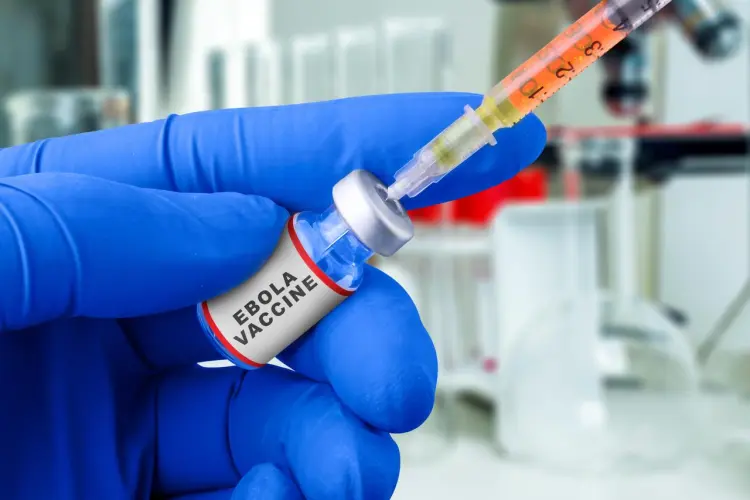
Uganda has begun a new phase of clinical trials for a candidate vaccine against the Bundibugyo strain of Ebola, as scientists step up efforts to develop protection against the virus responsible for an ongoing outbreak in the Democratic Republic of the Congo (DRC).
The Africa Centres for Disease Control and Prevention (Africa CDC) said the Phase Ib trials of the ChAdOx1 BDBV vaccine, developed by the University of Oxford, started in Uganda on 6 October 2026.
Wessam Mankoula, an Africa CDC official, announced the development during an online press briefing on Thursday, explaining that the Ugandan trials followed the launch of the vaccine’s initial Phase Ia trials in the United Kingdom in July.
The trials are part of efforts to establish whether the candidate vaccine can safely stimulate an immune response against the Bundibugyo Ebola virus.
A second candidate vaccine, developed by US biotechnology company Moderna, has also moved closer to further testing in Uganda. Mankoula said the vaccine received ethical approval for Phase Ib trials on 7 October, following the start of its Phase Ia trials in Canada in early August.
The two vaccine candidates are being developed as scientists seek ways to protect people against the Bundibugyo strain, for which there is currently no specifically approved vaccine or treatment.
Ebola is a severe disease that can cause internal and external bleeding, organ failure and death. It is transmitted through direct contact with the blood or other bodily fluids of an infected person or someone who has died from the disease, as well as contaminated materials.
The Bundibugyo strain is one of several viruses that cause Ebola disease. Vaccines developed against other strains cannot automatically be assumed to protect against it, making the development of a specific vaccine particularly important.
Clinical trials are conducted in phases to assess the safety of a candidate vaccine and gather evidence about its effects on the human body. The progression to Phase Ib testing does not mean that either candidate has been approved for public use.
The trials in Uganda are therefore an important step in the search for a vaccine that could help protect people at risk, although further testing will be needed before either candidate can be considered for wider use.


