


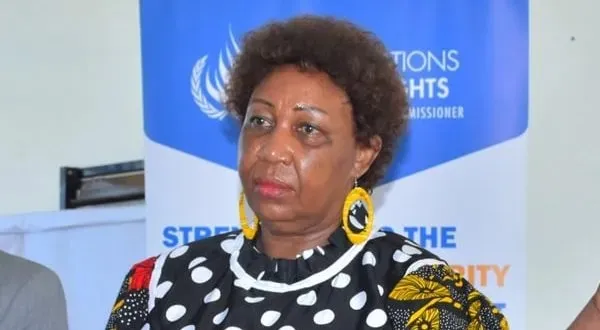
The Government has clarified that Mariam Wangadya remains the substantive Chairperson of the Uganda Human Rights Commission (UHRC), maintaining that her submission of a notice expressing the intention to resign does not legally amount to a formal resignation.
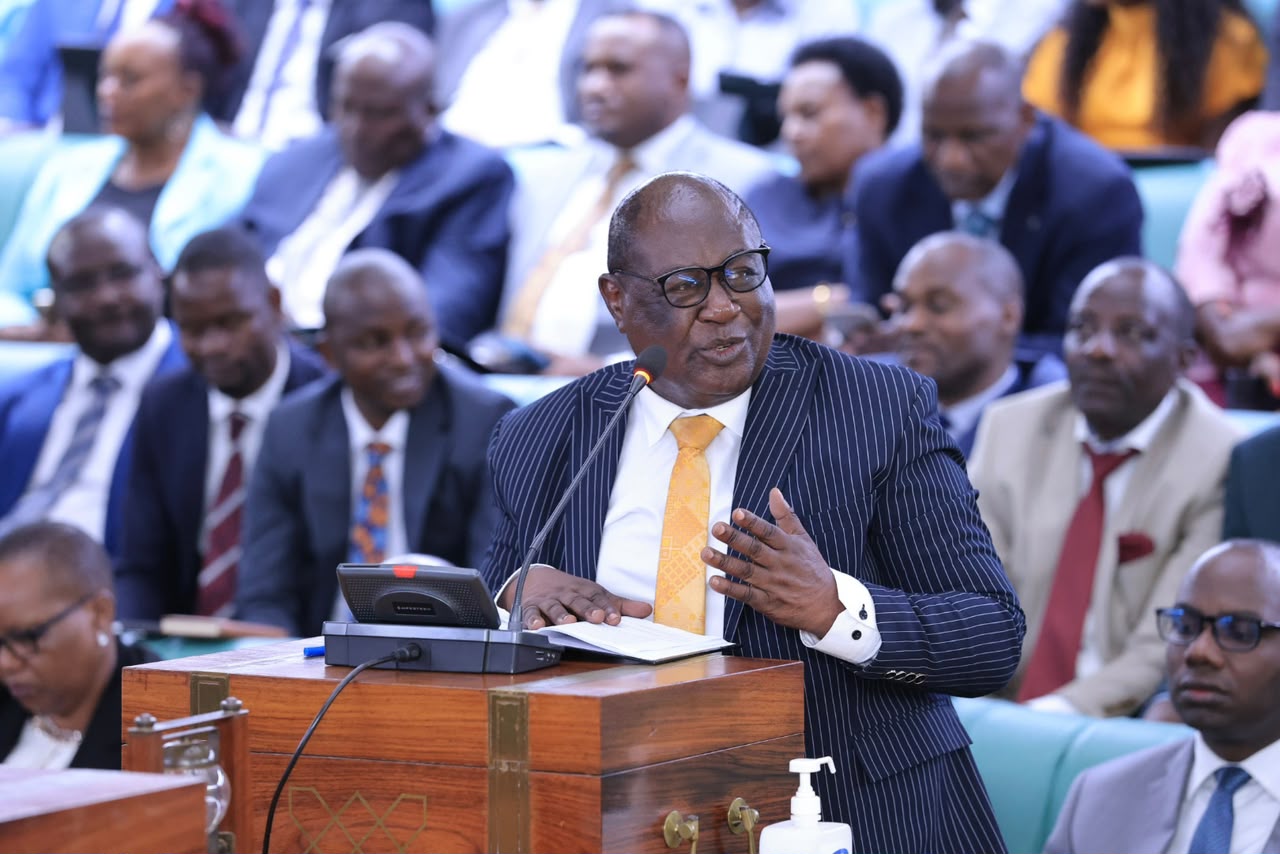
The clarification was made by the Attorney General, Dr. Sam Mayanja, during Parliament’s plenary sitting on Tuesday, 15 July 2026, while presenting a statement on the operations of the Uganda Human Rights Commission. His remarks followed concerns raised by Members of Parliament over the Commission’s effectiveness amid reports of internal disagreements and media speculation regarding investigations by the Inspector General of Government (IGG).
According to the Attorney General, Wangadya submitted a notice indicating her intention to resign to President Yoweri Museveni, the appointing authority, on 6 July 2026. However, he argued that under established legal principles, a notice of intention to resign is not equivalent to an actual resignation.
“A notice to resign does not amount to resignation, but merely communicates the desire to resign and cannot be treated as a resignation,” Mayanja told Parliament.
He added that Wangadya legally remains the substantive Chairperson until she formally submits a resignation letter to the appointing authority and that resignation is accepted.
The Attorney General further dismissed reports suggesting that the Commission’s work had been paralysed by leadership wrangles, insisting that the institution continues to execute its constitutional mandate.
“There are no investigations being carried out by the Inspector General of Government against either any member of the Human Rights Commission or its staff,” Mayanja said.
He added that should the IGG undertake any future investigations into the Commission, the findings would be submitted to Parliament in accordance with the law.
Despite the Attorney General’s assurances, several legislators questioned whether the Government’s explanation sufficiently addressed concerns about the Commission’s internal governance and its ability to effectively protect human rights.
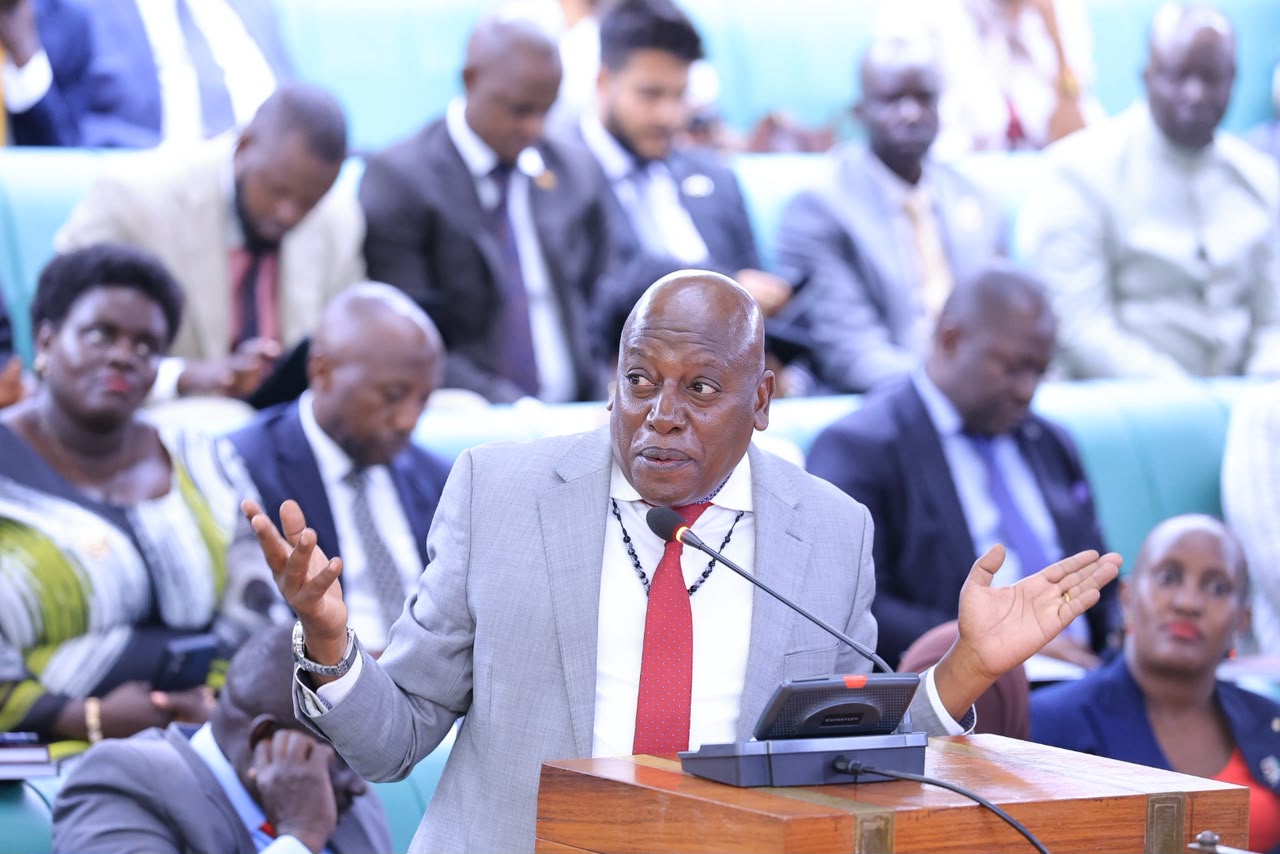
Kalungu West MP Joseph Ssewungu Gonzaga argued that reports of internal conflicts within the Commission had undermined public confidence in an institution constitutionally mandated to investigate human rights violations and provide remedies to victims.
He also referred to allegations that commissioners had publicly made claims regarding colleagues’ HIV status, describing such conduct as deeply concerning and potentially inconsistent with Uganda’s legal protections against discrimination and unauthorised disclosure of HIV-related information.
Ssewungu urged the Government to engage the appointing authority to restore confidence in the Commission. “It is shameful that people seeking remedies from the Commission may lose confidence in an institution that appears unable to resolve its own internal disputes,” he said.
Kassanda North MP Patrick Nsamba similarly questioned the Government’s assertion that the Commission was functioning normally. He argued that recurring reports of alleged human rights violations across the country, coupled with leadership disagreements within the Commission, raised legitimate questions about its effectiveness.
Nsamba also cited findings in the Auditor General’s 2025 report indicating that the Commission still had more than 1,000 unresolved cases dating back over two decades, arguing that the backlog reflects longstanding institutional challenges requiring urgent attention.
Speaker of Parliament Jacob Oboth acknowledged the concerns raised by legislators and proposed a dedicated parliamentary debate on Uganda’s human rights framework.
He said Parliament should comprehensively examine how the country balances the constitutional rights of accused persons, victims and the broader public interest while ensuring respect for the rule of law.
“Uganda has made considerable progress in the promotion and protection of human rights, but Parliament should dedicate time to discuss these issues comprehensively and honestly,” the Speaker said.
He suggested that such a debate should explore whether existing laws adequately balance the rights of individuals with the need to combat crime and promote justice.
The Uganda Human Rights Commission is established under Chapter Four of the Constitution of Uganda (1995) as an independent constitutional body mandated to promote and protect human rights.
Under Article 51 of the Constitution, the Commission is responsible for investigating complaints of human rights violations, visiting detention facilities, conducting civic education, monitoring government compliance with human rights standards and ordering compensation or other remedies where violations are established.
The Commission also exercises powers similar to those of a court in conducting investigations and hearings. The Uganda Human Rights Commission Act provides the legal framework governing the Commission’s administration and operations.
Although the Constitution provides for the appointment of the Chairperson and members of the Commission by the President with the approval of Parliament, legal practice generally distinguishes between a notice expressing an intention to resign and a formal resignation that takes legal effect upon fulfilment of the applicable procedures.
The Attorney General’s interpretation reflects the Government’s position that Wangadya continues to hold office until the resignation process is formally concluded in accordance with the applicable constitutional and administrative requirements.
The allegations referenced during the parliamentary debate also raise broader legal issues under the HIV and AIDS Prevention and Control Act, 2014, which protects the confidentiality of an individual’s HIV status and prohibits unlawful disclosure except in limited circumstances prescribed by law.
While Parliament referenced allegations of inappropriate disclosures, no findings have been presented by any competent authority establishing that the Act was breached.
The parliamentary exchanges underscore growing concern over both the leadership and performance of Uganda’s principal human rights institution.
While the Government insists the Commission remains fully operational and unaffected by leadership issues, legislators from across the political divide argue that public confidence depends not only on legal continuity but also on institutional cohesion, transparency and timely delivery of justice to victims of human rights violations.
Source By Parliamentwatch Ug


, maintaining that her submission of a notice expressing the intention to resign does not legally amount to a formal resignation.)