


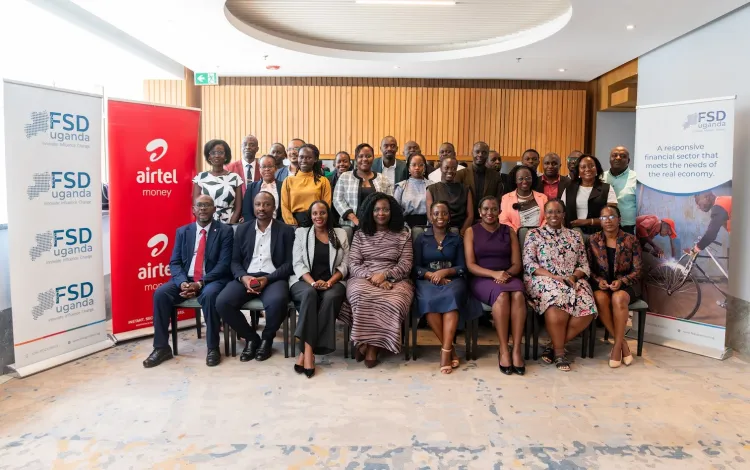
Young women in Uganda continue to face major barriers in accessing financial services, according to new findings from the 2022 FinScope Uganda survey conducted by the Financial Sector Deepening (FSD) Uganda.
Speaking at the release of the findings, Joseph Lutwama, a research and financial inclusion expert at FSD Uganda, highlighted that while efforts have been made to improve access, most initiatives have largely focused on women in general, leaving younger women underserved.
The study identified limited access to national identification cards as one of the key challenges preventing young women from accessing formal financial services such as mobile money platforms.
Lutwama noted that many young women either lack national IDs or have not completed the registration process, restricting their participation in the formal financial system.
Additionally, low and unstable incomes among young women in small businesses make it difficult for them to maintain and use mobile money accounts, carry out transactions, or access loans from financial institutions.
FSD Uganda is now encouraging stakeholders to design affordable and inclusive financial products tailored specifically to young women.
The study also pointed to cultural and social barriers, explaining that traditional norms often limit women’s participation in economic activities, further affecting their financial independence.
Lutwama emphasized the importance of collective action, calling on communities, families, and both men and women to support young women’s economic empowerment.
Despite ongoing efforts, including the National Identification and Registration Authority’s (NIRA) mass registration of citizens for national IDs, gaps still remain. Lutwama stressed the need to improve access, especially among women and youth in underserved communities.
The findings are expected to guide future policy interventions and the development of targeted financial products aimed at boosting financial inclusion among young women across Uganda.


 Uganda.)