


East African Community financial obligations are set to be enforced through renewed diplomatic lobbying as arrears among Partner States continue to strain the bloc’s operations and integration agenda.
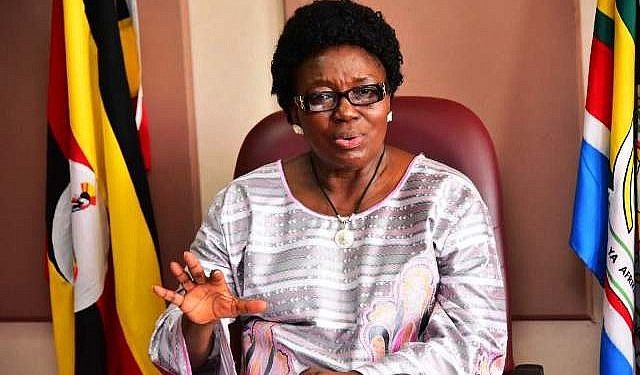
Speaking after a vetting session by Parliament’s Committee on Appointments on Tuesday, First Deputy Prime Minister and Minister for East African Community Affairs Rebecca Kadaga said she will personally travel to East African capitals to push member states to meet their financial commitments under the EAC Treaty.
She noted that the Community is currently being sustained largely by contributions from Uganda, Kenya, Tanzania, and Rwanda, while several other Partner States remain in arrears despite benefiting from regional integration. “The others are not compliant as they should be, but I am planning to move to all capitals to make an appeal to ensure that money is found because they are partners and they enjoy the services, but should also contribute,” she stated.
The East African Community, now comprising eight Partner States—Burundi, Democratic Republic of Congo (DRC), Kenya, Rwanda, Somalia, South Sudan, Tanzania, and Uganda—has expanded significantly from the original trio of Kenya, Tanzania, and Uganda when the Treaty entered into force in 2000. Subsequent accessions include Rwanda and Burundi (2007), South Sudan (2016), DRC (2022), and Somalia (2024).
This rapid expansion, which advances the vision of the East African Integration Dream—a Pan-African ambition for a unified federal East Africa with a single currency, president, and institutions serving over 300 million people—has also exposed weaknesses in the bloc’s funding structure.
Under the Treaty for the Establishment of the East African Community, Partner States are required to contribute to the Community budget as a core obligation.
Article 5 and related provisions emphasize equitable sharing of both benefits and responsibilities in advancing the Customs Union, Common Market, Monetary Union, and eventual Political Federation.
Historically, the EAC relied on equal contributions from all members, a model that worked for the founding states but became increasingly unsustainable after expansion.
Recent summit decisions introduced a hybrid formula combining equal contributions with GDP-based assessments (35 percent) to improve fairness, though implementation remains inconsistent.
As of early 2026, arrears are estimated at between $55 million and $90 million (approximately Shs207.4 billion to Shs339.4 billion). Countries including DRC, Burundi, South Sudan, and Somalia are frequently cited among the major defaulters, often due to domestic economic and security challenges.
Compliance in some periods has fallen to as low as 36 percent, forcing reliance on a few consistent contributors alongside development partners for an annual budget of about $109 million (approximately Shs410.3 billion).
The funding gaps have disrupted key EAC operations, including salaries at the Arusha Secretariat, institutions such as the East African Legislative Assembly (EALA) and the East African Court of Justice, as well as infrastructure development, trade facilitation, and programs aimed at free movement of goods, services, and people.
Analysts warn that sustained underfunding risks slowing regional trade integration, delaying regulatory harmonisation, and weakening the bloc’s competitiveness on the global stage.
Kadaga’s initiative comes at a critical moment as the EAC positions itself as a key building block of the African Continental Free Trade Area (AfCFTA), with the successful resolution of funding gaps seen as essential to strengthening the bloc’s long-term stability and influence


