


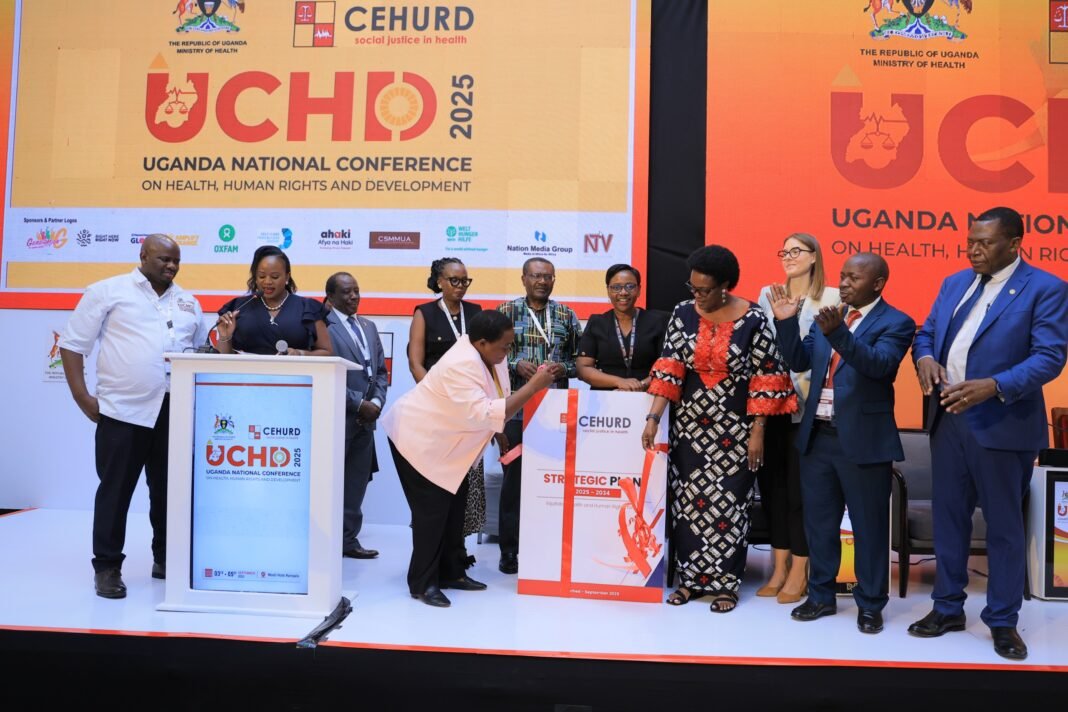
The Uganda National Conference on Health, Human Rights, and Development (UCHD) 2025 has concluded, leaving behind powerful insights, bold conversations, and renewed commitments to advancing health equity. The bi-annual gathering, first held in 2023, has quickly become a unique space for reflection, knowledge-sharing, and cross-sector collaboration. This year’s theme, “The Right to Health: Bridging Gaps Across Sectors to Achieve Equal Health for All,” set the tone for three days of rich dialogue on how social, cultural, environmental, and economic factors shape health outcomes in Uganda and across Africa.
The conference opened with inspiring remarks from senior government officials, development partners, and civil society leaders. The Prime Minister emphasized that health is both a right and a driver of development, underlining the need for multi-sectoral collaboration. Statistics from the Uganda Demographic Health Survey were sobering—1 in 4 girls aged 15–19 is already a mother, and maternal mortality, while declining, is still far from global targets. The Prime Minister committed government support through inter-ministerial coordination, aligning with Vision 2040 and the Fourth National Development Plan.
Key messages from Day One included:
- Health systems alone contribute only 20% of outcomes; the remaining 80% depends on social determinants such as education, housing, nutrition, water, and climate.
- Persistent challenges like unemployment, climate-driven food insecurity, and gender-based violence cannot be solved by the health sector alone.
- Uganda’s experience shows that multi-sectoral approaches work—examples include joint interventions in teenage pregnancy, HIV response, and climate-smart agriculture.
The day ended with the official opening declaration, setting a strong foundation for dialogue.
Day Two: Social Determinants in Focus
Panel discussions highlighted how socio-economic, cultural, and environmental factors affect health. Speakers noted that access to clean water, sanitation, decent housing, and quality education are as critical as hospitals and medicines.
- Youth Voices: Young people, including representatives from Ghana and Uganda, emphasized challenges around early marriage, unemployment, and limited access to sexual and reproductive health services. They called for meaningful participation in planning and accountability.
- Disability and Inclusion: Advocates highlighted the need for disability-friendly health facilities, inclusive education, and stronger enforcement of existing laws to protect persons with disabilities from stigma, exploitation, and lack of access.
- Kidney and NCD Burden: Medical experts raised concerns about rising kidney disease, hypertension, and cancers. They underscored the importance of prevention, early diagnosis, and investment in specialized care.
- UNFPA and UNICEF Contributions: Agencies shared experiences on harnessing the demographic dividend, promoting sexual education, shifting harmful social norms, and empowering communities through economic opportunities.
Cultural perspectives were also front and center. Traditional practices like tree-planting ceremonies and communal eating were discussed for their role in nutrition, environment, and social cohesion. Leaders called for integrating positive cultural values into modern health strategies.
The final day (day three) brought candid conversations that addressed both sensitive and controversial issues:
- Political Leadership: A district politician spoke boldly against harmful funeral-night fundraising practices, linking them to teenage pregnancy, school dropouts, and fistula. Despite backlash, he emphasized the need for Cabinet-level action, mindset change, and parental responsibility.
- Faith Leaders: Muslim community leaders highlighted challenges around misinformation, inadequate health facilities in rural areas, and cultural clashes during health campaigns. They called for better information flow, tailored outreach, and stronger partnerships with imams and mosques.
- Legal and Human Rights Lens: Advocates shared landmark court cases on detention of patients over medical bills, access to sexual education, and environmental negligence (e.g., the Kiteezi landfill explosion). These cases illustrated how legal action can protect the right to health and hold institutions accountable.
- HIV and Stigma: Young people living with HIV shared their lived experiences, calling for an end to stigma and punitive laws. They emphasized that “it is not HIV that kills, but stigma and discrimination.” They demanded that young people be given the power to design and lead solutions.
Across all sessions, one message was clear: health is created outside hospitals. Education, gender equity, cultural practices, environment, and economic empowerment all converge to shape whether individuals and communities thrive.
The conference highlighted:
- The urgency of cross-sector collaboration between ministries, civil society, cultural and religious leaders.
- The need for inclusive policies that prioritize women, youth, and persons with disabilities.
- The importance of accountability mechanisms to translate policies into action.
- The role of culture and faith as both enablers and barriers to health outcomes.
The Uganda National Conference on Health, Human Rights, and Development 2025 proved once again that achieving universal health coverage and equitable outcomes requires more than medical solutions. It calls for honest dialogue, bold leadership, and collective responsibility across every sector of society.
As Uganda positions itself as a champion of self-care and multi-sectoral health approaches, the voices from UCHD 2025 will inform policy, inspire communities, and guide future collaboration. From government halls to grassroots villages, the momentum from this conference must continue to drive change.


 2025 has concluded, leaving behind powerful insights, bold conversations, and renewed commitments to advancing health equity.)