


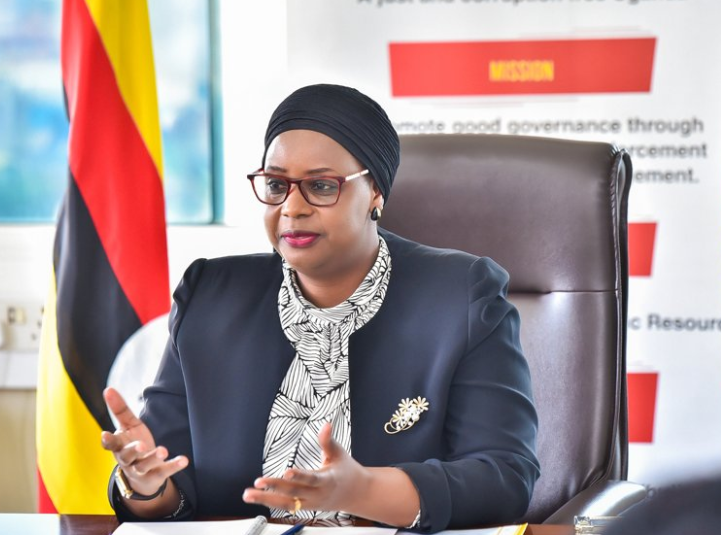
The Inspectorate of Government has recovered over Shs 2 billion in misappropriated public funds, Inspector General of Government (IGG) Justice Aisha Naluzze Batala announced, underscoring a renewed push for accountability in government institutions.
Between July and December 2025, the Inspectorate received 1,516 complaints and sanctioned 1,151 cases (75%) for action. In the same period, 308 corruption cases and 330 Ombudsman matters were concluded, including 14 high-profile corruption investigations.
The IGG revealed that Shs 2,021,869,076 was recovered from misappropriation, while Shs 844,122,884 was paid to public officials who had faced delays or denial of salaries, pensions, or gratuities.
Justice Naluzze said the Inspectorate implemented 378 out of 1,392 recommendations (27%) and conducted eight systemic investigations along with seven system reviews to strengthen institutional governance. Additionally, 246 breach-of-code investigations and 927 verifications were completed, while intelligence-led operations generated 27 new cases, reflecting a shift toward proactive enforcement.
“I have set a target to increase the prosecution rate to 70% by the end of FY 2025/2026. Public officials must take notice: if we get you, prosecution is our first action,” she said.
The IGG also pledged to ensure that at least 50% of recommendations are implemented through strengthened follow-up mechanisms. The Inspectorate plans to enhance verification processes using analytical tools and specialized expertise, including financial analysts, to improve rigor and accuracy
Justice Naluzze highlighted ongoing efforts to deepen collaboration with stakeholders and development partners, eliminate duplication, and mobilize resources, ensuring the Inspectorate is better equipped to deliver on its mandate.
The IGG further noted that prosecution-led investigations will focus on high-profile and high-impact corruption cases to strengthen deterrence.
“We will work closely with other anti-corruption agencies to ensure a unified national response, promoting a whole-of-government approach. Ministries, departments, agencies, and local governments will be supported to mainstream anti-corruption measures into their plans, budgets, projects, and programmes,” she said.


 Justice Aisha Naluzze Batala announced)