


Government has allocated Shs2.26 trillion to agro-industrialisation in the 2026/27 Budget, with spending directed to research, irrigation, extension services, inputs, post-harvest handling, agro-processing, certification and market access.
Finance Minister Henry Musasizi said agriculture remains central to Uganda’s economy because it employs millions of people, supplies raw materials to industry, supports exports and sustains rural livelihoods. He said government’s focus is to shift the sector from raw commodity production to value-added agricultural products.
The allocation is the highest given to the agro-industrialisation programme, according to the Budget Speech. It comes under government’s ATMS growth plan, which covers agro-industrialisation, tourism, mineral-based industrial development, and science, technology and innovation.
The Shs2.26 trillion agriculture allocation, however, remains below the Maputo commitment, if measured against Uganda’s total Shs84.39 trillion national budget. The 2003 Maputo Declaration on Agriculture and Food Security committed African governments to increase budgetary allocations to agriculture to at least 10 percent of national budgets.
By that measure, Uganda’s direct agro-industrialisation allocation is about 2.7 percent of the total budget.
The Budget Speech says the money will support agricultural research and innovation, including funding for commercialisation of the anti-tick vaccine. Government says the anti-tick vaccine facility at the National Livestock Resources Research Institute in Nakyesasa has been completed and is operational, with capacity to produce about 36 million doses to serve 18 million livestock in the first year.
Government also reported progress on foot-and-mouth disease vaccines, disease-resistant crops and livestock breeds.
Irrigation is another major line in the agriculture plan. Government says work continued on Kabuyanda dam in Isingiro, Atari in Bulambuli, Wadelai in Pakwach, Acomai in Bukedea, Namaitsu in Bududa, Chembombai in Bukwo and Sipi Irrigation Scheme in Bulambuli.
The Budget also lists solar-powered irrigation systems among interventions being rolled out to reduce dependence on rainfall and support production throughout the year.
Under mechanisation and animal health, government says it continued developing Regional Agricultural Mechanisation Centres and Animal Disease Control Centres in Kiruhura, Mbale, Kiryandongo, Bunyangabu, Nakaseke, Katine and other districts.
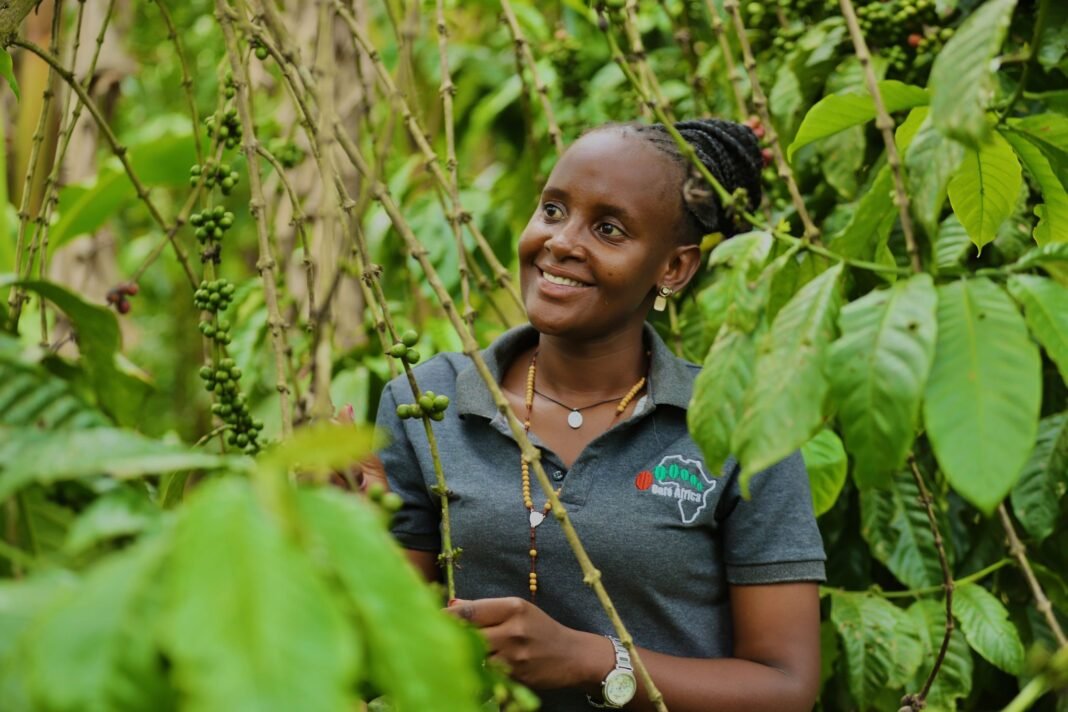
Coffee also remains a key focus. Government says two coffee mother gardens were established and more than 1.4 million coffee seedlings were distributed to 7,532 farmers in Northern Uganda. The aim is to expand commercial coffee production beyond traditional growing areas.
The agriculture budget also connects to wider wealth-creation funds.
Under the Parish Development Model, government says Shs4.4 trillion has been transferred to all 10,589 parishes as revolving capital over the past five years. By the end of June, PDM funds are expected to have reached more than 4 million beneficiaries. The next phase will focus on productivity, value addition and market access.
The Agricultural Credit Facility has received an additional Shs47.68 billion for 2026/27. Government says it has so far invested Shs371.7 billion in the facility, which has cumulatively disbursed Shs1.35 trillion to more than 14,000 beneficiaries.
Large-scale commercial farmers will also receive support. Government has allocated another Shs41 billion to pay interest on behalf of farmers cultivating more than 50 acres of grains and animal feeds. In 2025/26, the same support enabled 186 farmers to access Shs169.1 billion from government-owned commercial banks.
The Budget also places agriculture inside Uganda’s export strategy. Government says exports of goods and services reached USD18.04 billion in the twelve months to March 2026, with coffee exports alone rising to USD2.46 billion. The leading exports include gold, coffee, cocoa, fish products, steel products, sugar and manufactured goods.
Musasizi said Uganda’s next step is not just producing more agricultural commodities, but increasing productivity, processing, quality assurance and access to markets.
That message fits the Maputo framework, which pushed African governments to treat agriculture as a budget priority for food security, rural development and growth. The wider CAADP agenda also linked agriculture spending to stronger sector growth, hunger reduction and rural incomes.
For Uganda, the budget numbers show both movement and a gap.
On one side, agriculture gets its highest agro-industrialisation allocation, more money for irrigation, extension, research, inputs, processing and credit. On the other, the direct allocation remains far below the 10 percent Maputo benchmark when compared with the full national budget.
Government is therefore betting on a mixed model: direct agriculture funding, PDM money at parish level, cheaper credit through the Agricultural Credit Facility, interest support for large farmers, UDB financing and industrial investment in value addition.


