


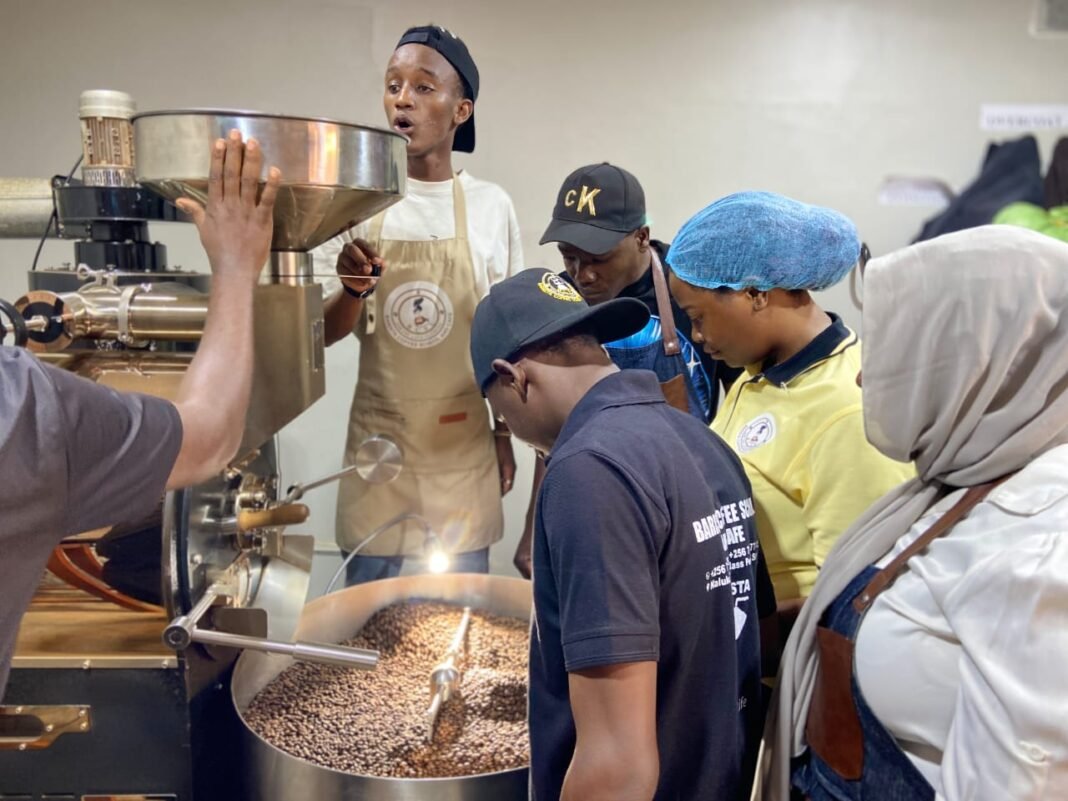
NALUKOLONGO, KAMPALA — Inside a busy training room in Nalukolongo, the sound of steaming milk, grinding coffee beans and humming espresso machines fills the air as students in aprons carefully practice latte art under the supervision of instructors.
At Barista Coffee School and Café, learning is intentionally designed to reflect the realities of modern cafés and hospitality establishments rather than relying heavily on traditional classroom theory.
Established in 2021 and located in Lubaga Division opposite Hass Petro Station in Nalukolongo, the institution has quickly positioned itself among Uganda’s emerging coffee training hubs, offering structured practical programs aimed at meeting the growing demand for skilled baristas and hospitality workers.
From beginners learning green coffee knowledge, espresso extraction and milk steaming to advanced trainees mastering latte art patterns, alternative brewing methods and customer service, the school’s curriculum focuses on direct industry exposure and technical competence.
According to Emmanuel Mugisha, the Chief Executive Officer of Barista Coffee School and Café, Uganda’s coffee and hospitality industries are becoming increasingly competitive, forcing employers to prioritise practical competence during recruitment.
“Most café owners and hotel managers today want someone who can immediately operate professional coffee equipment, interact with customers confidently and maintain quality standards,” Mugisha said during an interview at the school. “That is why practical training is becoming more important than simply claiming experience.”
Mariam Nabukeera, a barista trainer at the institution, explained that many self-taught baristas struggle when exposed to professional café environments because they often lack technical consistency and understanding of industry preparation standards.
“A person may know how to prepare coffee casually, but commercial coffee service requires precision,” Nabukeera said.
“You must understand espresso calibration, milk texture, machine cleaning, beverage presentation and workflow management. Employers prefer graduates who already understand these systems.”
The school uses modern industry-standard coffee equipment to simulate real café environments, allowing trainees to repeatedly practice brewing techniques before entering the job market.
Students are also trained in equipment maintenance, hygiene standards, customer engagement and café operations skills Mugisha says are increasingly critical in both local and international hospitality markets.
“We focus on producing professionals, not just coffee makers,” Nabukeera added. “The hospitality sector is about the customer experience from the first greeting to the final cup.”
For student trainee Norah Nakitto, the practical structure of the program has helped her gain confidence and discipline.
“Here you don’t just sit and listen to theory,” she said while practicing milk steaming techniques. “You work directly with machines every day, and instructors correct you immediately. That hands-on experience prepares us for real jobs.”
Another trainee, Jowel Segawa, said the training exposed him to technical skills he had previously underestimated.
“I used to think being a barista was simple,” he explained. “But learning espresso extraction, grinding consistency and latte art requires patience and practice. Employers today expect professionalism.”
The institution also conducts specialised masterclass workshops focusing on coffee roasting, sourcing and sensory skills, reflecting the growing sophistication within Uganda’s coffee sector.
Beyond training, the school supplies roasted coffee beans and ground coffee to homes, restaurants, hotels, corporate offices and cafés, positioning itself as both a vocational centre and coffee solutions provider.
Coffee consumers say professionally trained baristas are improving customer experiences within Uganda’s expanding café culture.
“When coffee is prepared by someone skilled, you notice the difference immediately,” said Gloria Nakiyingi, a coffee enthusiast in Kampala. “The flavour, presentation and service become more enjoyable. Customers are becoming more selective.”
Another coffee enthusiast, Mark Ssekamatte, believes formal barista training is helping raise standards within Uganda’s hospitality industry.
“People now visit cafés not only for coffee but also for ambience and experience,” he said. “Professional baristas create consistency, and that keeps customers coming back.”
The school’s mission also extends beyond Uganda’s borders. Through partnerships with licensed labour export and recruitment companies, graduates are linked to international employment opportunities in countries with high demand for skilled hospitality workers.
Mugisha says international employers increasingly require certified professionals with practical exposure and customer-service training.
“Global hospitality markets are competitive,” he said. “Training institutions like ours help Ugandan youth become employable both locally and internationally.”
As Uganda continues strengthening its position as one of Africa’s leading coffee producers, industry observers believe vocational coffee schools may become increasingly important in supporting value addition, café culture and hospitality professionalism.
For students practicing behind espresso machines in Nalukolongo, the future of Uganda’s coffee industry is no longer only about growing beans it is also about mastering the art of serving them.


