


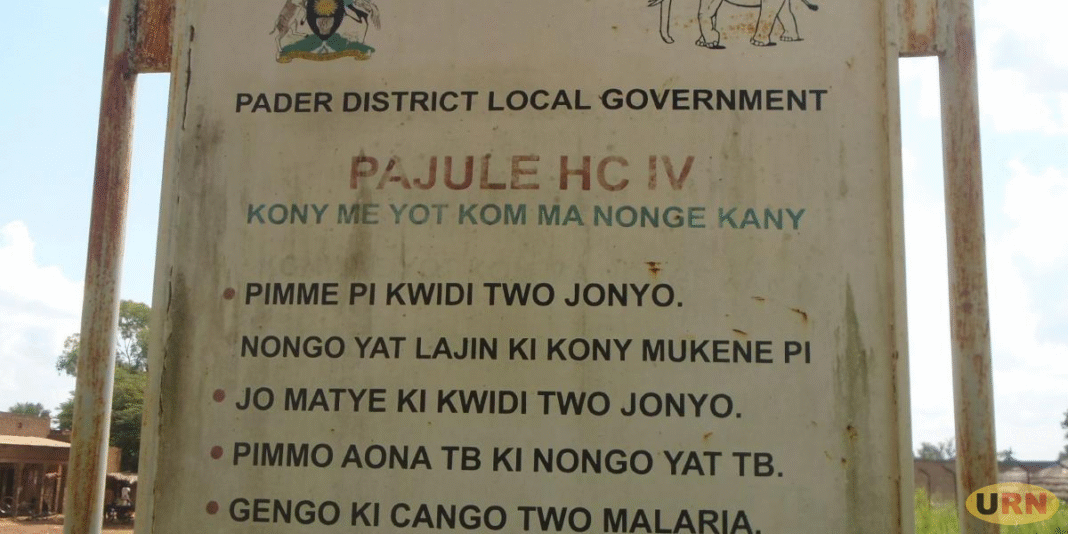
PADER, Uganda — Patients at Pajule Health Centre IV in Pader District are facing difficulties accessing health services after the National Water and Sewerage Corporation (NWSC) disconnected the facility’s piped water supply over an outstanding bill of Shs2.6 million.
The health centre has been without piped water for about two weeks, forcing staff and patients to depend on the facility’s only borehole.
Dr Denis Odongkara, the health centre’s in-charge, said the water shortage is affecting the facility’s operations, particularly the maternity and laboratory units, which require a constant supply of water.
The situation has also increased pressure on the borehole because it serves both the health centre and residents from the surrounding community. Patients and community members have reportedly been spending hours in queues to collect water.
Pajule Town Council chairperson Brilliant Tito Okello said the health centre’s water bill has continued to increase because residents also depend on its water source.
Okello said the facility receives Shs500,000 every quarter for water expenses, but the money is insufficient to meet the growing costs. The current bill has accumulated to Shs2.6 million.
Local authorities have appealed to NWSC to reconnect water to critical sections of the health centre, especially the maternity and laboratory units, to prevent further disruption of essential medical services.
Okello said the authorities would also encourage residents to repair and maintain their own boreholes.
Several community water sources have reportedly remained out of service for about two years, leaving the health centre as one of the few reliable sources in the area.
He said authorities also plan to improve security at the health centre to prevent unauthorised use of its water facilities.
Pajule Health Centre IV provides outpatient and inpatient services to an estimated 250 patients each day.
Patrick Okumu, NWSC’s Pader Branch manager, said the corporation had met with the health centre administration and agreed to restore water supply to the critical units.
However, Okumu criticised the facility management over what he described as poor prioritisation of utility payments.
He alleged that money intended for essential services, including water, had been used for other activities.
He urged the health centre to prioritise settling its water arrears, warning that continued lack of piped water could undermine the delivery of health services.
Okumu also said the Shs2.6 million debt may not represent the facility’s entire outstanding balance because Pajule Health Centre IV operates three separate NWSC accounts.
Although the planned reconnection of critical units is expected to ease the immediate pressure, the facility still faces the challenge of clearing its outstanding bills and finding a sustainable solution to the water shortage affecting both the health centre and the surrounding community.


 disconnected the facility’s piped water supply over an outstanding bill of Shs2.6 million.)