


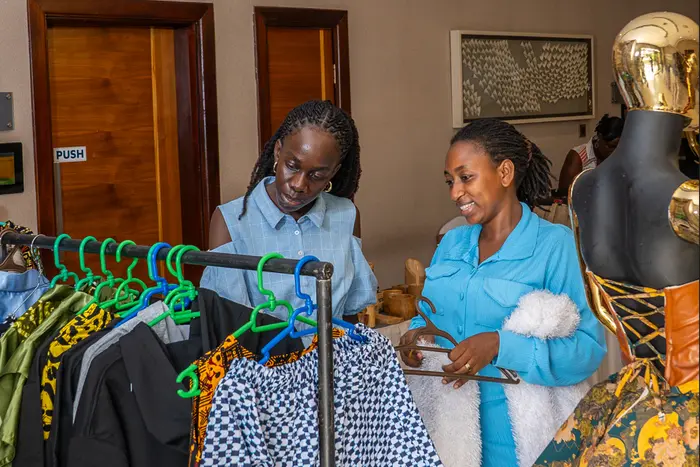
Thousands of young Ugandans are pursuing opportunities in music, film, fashion, theatre and other creative fields. However, turning their talents into sustainable careers remains a challenge for many, particularly young women who lack access to financing, professional training and established industry networks.
For some, the challenge is finding someone willing to invest in their ideas. Others struggle to access paying clients, protect their creative work or compete in industries where professional connections often determine who gets opportunities.
Young creatives in rural communities face additional barriers, making it harder for them to showcase their work and access markets.
A three-year initiative supported by the International Trade Centre (ITC) and the Mastercard Foundation is seeking to address these challenges by equipping young women with practical skills, connecting them to markets and helping them access funding to establish and grow their businesses.
Known as CREATE, the programme aims to reach 84,000 young women and enable 40,000 of them to access dignified and fulfilling work by September 2028.
The initiative, led by ITC and Bayimba Foundation in partnership with the Mastercard Foundation, targets young women aged 18 to 35 working across film, television, digital media, music, theatre, fashion, textiles and handicrafts.
Its progress and future plans were presented to journalists on Monday, October 26, 2026, during the inaugural CREATE Media Café held at Golden Tulip Hotel in Kampala.
Early results
During its first year, CREATE reached 5,521 young people through employment-related outreach activities, with 699 securing work and 61 creative enterprises receiving support to expand and formalise their operations.
The programme has also supported the development of a draft national strategy for Uganda’s creative industries, which has been submitted to the government.
Deborah Asikeit, the ITC programme manager, said the initiative was designed to help young women move beyond having creative talent to earning a living from it.
“The goal is to turn creative talent into dignified and fulfilling work through market-relevant skills, market linkages and inclusive finance,” she said.
Asikeit noted that many young women in the creative economy operate in an informal environment, where access to funding, intellectual property protection and supportive policies remains limited.
She added that the exclusion of rural creatives from mainstream industry opportunities was another challenge the programme intended to address.
Rather than concentrating on training alone, CREATE combines skills development with business support, financing and links to potential employers and buyers.
Under its targets, the programme plans to equip 76,000 young women with market-relevant skills, place 3,370 in internships and industry residencies, and provide tailored support to more than 1,600 women-owned creative businesses.
Eligible participants can also access competitive grants, start-up assistance and concessional loans.
The financing model includes a revolving fund and partial credit guarantees intended to encourage financial institutions to extend credit to creative enterprises.
Participation is free for eligible young women.
The initiative operates in 13 districts: Kampala, Jinja, Mbarara, Mukono, Kayunga, Arua, Kitgum, Moroto, Mbale, Butaleja, Buikwe, Bundibugyo and Fort Portal.
It also seeks to ensure that young refugees and persons with disabilities are included in its activities.
Connecting talent to markets
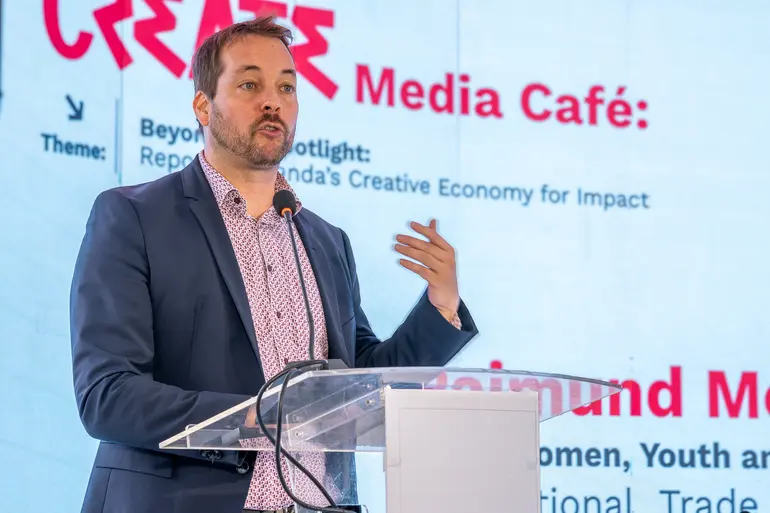
Raimund Moser, ITC’s chief of Women, Youth and Vulnerable Communities, said the programme was focused on creating pathways into employment and helping creative businesses become more competitive.
Moser explained that connecting businesses to markets was central to ITC’s work, adding that training would have limited impact if participants could not find opportunities to apply their skills and earn an income.
“Our focus at ITC is on connecting MSMEs to international markets. We want to take a market-led approach to develop creative jobs,” he said.
He added: “We know that if we want to be successful, we have to ensure that the training goes beyond just building jobs to creating pathways and enabling jobs.”
Moser said micro, small and medium enterprises were particularly important because their growth could generate employment and increase the value of locally produced goods and services.
“We are focused on MSMEs because that is where value addition starts from and when they grow and become more competitive, they create more and better jobs, particularly for young women,” he said.
The programme’s approach reflects the need to connect skills development with real business opportunities, enabling young women to turn their ideas into products and services that can compete in the marketplace.
Businesses begin to see growth
For some participants, the benefits are already becoming visible through improved access to customers and growing demand for their products.
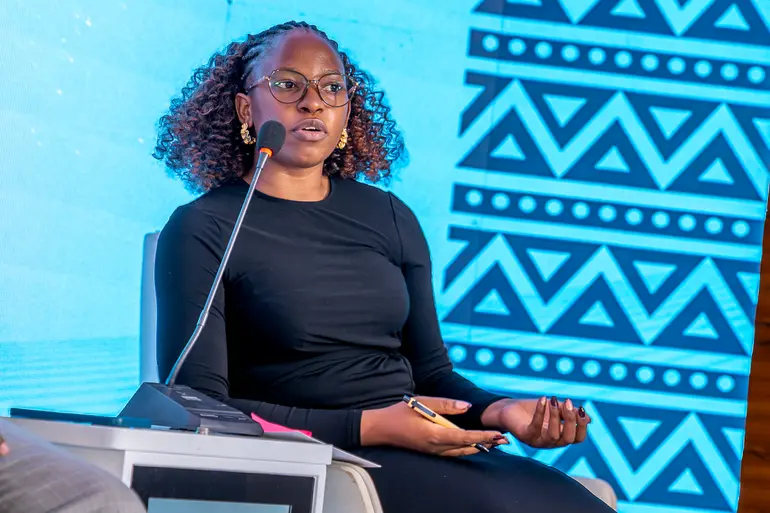
Dorothy Ntenyingi, founder and chief executive of Bamboo by Kristy, said support from the initiative had helped her business expand its reach in the market.
The company makes souvenirs and other products from bamboo, tapping into growing interest in sustainable alternatives.
Ntenyingi said the business had benefited from increased demand for environmentally friendly products since its launch two years ago.
“We launched two years ago. We have greatly benefited from the growing interest in sustainable products in Uganda,” she said.
She added that the support had contributed to a significant increase in the market for the company’s products.
“With support from the programme, we are seeing exponential market growth for our products. We are supplying souvenirs to nearly half of the corporate companies in Uganda,” she said.
Her experience illustrates how businesses in the creative sector can benefit from market access and changing consumer preferences when they have the capacity to respond to demand.
Training opens doors in performing arts
In film and theatre, where opportunities can be difficult to secure without professional experience and industry connections, structured training is also helping young women get their work noticed.
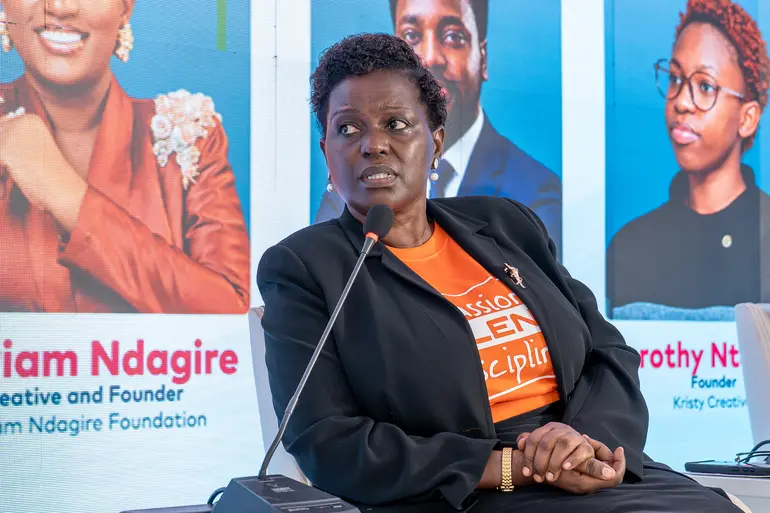
Mariam Ndagire, founder of the Mariam Ndagire Film and Performing Arts Centre, said mentorship and practical training were helping participants move into professional assignments.
The centre is among the programme’s delivery partners.
Ndagire cited the example of a young woman who secured a stage-design assignment after only six weeks of training.
“One of the girls in our first cohort is doing set design. We just had her for six weeks and the next thing I know, she was hired by Abbey Mukiibi to create the stage for his latest production,” she said.
She believes that providing young women with the right guidance and opportunities could help transform the industry.
“If these girls are given direction, this industry will change,” Ndagire said.
She noted that many aspiring filmmakers and theatre practitioners struggle to establish themselves because they lack access to professional development and networks that can connect them to paying assignments.
Through the programme, participants are being introduced to skills and industry relationships that could help them navigate these challenges and build careers.

Government seeks a more organised sector
Beyond individual businesses and training opportunities, CREATE is also supporting efforts to establish a clearer policy framework for Uganda’s creative industries.
Bernard Bakaye Lubega, commissioner for Culture at the Ministry of Gender, Labour and Social Development, said the sector needed to be treated as an important contributor to the economy rather than simply as a source of entertainment.
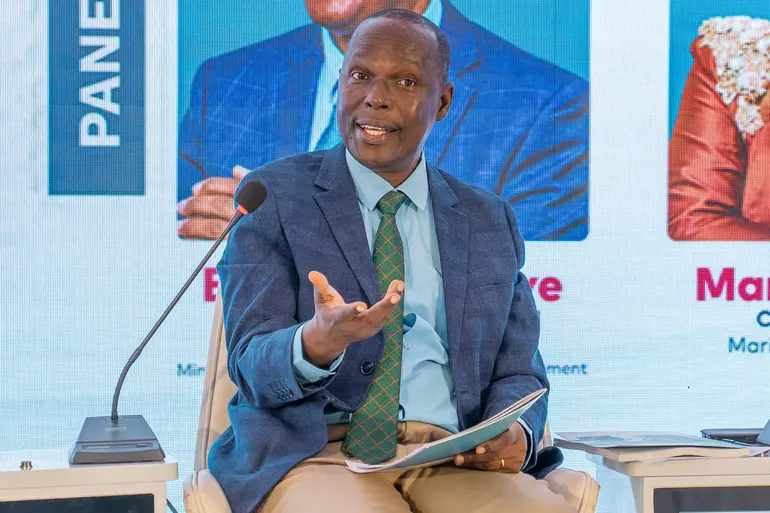
“We must look at the creative sector as a strategic economic sector like others because that is what it is,” Lubega said.
“Creativity is a resource that is transformed for businesses, goods and services.”
He said the government had worked with ITC to develop a strategy intended to address fragmentation and provide a common direction for the sector.
“One of the things we have struggled with is having a sector that is fragmented; we have had so many players that lack a sense of direction,” he said.
The strategy is expected to guide coordination among artists, creative enterprises, training institutions and government agencies, while providing a framework for developing the industry.
A more coordinated sector could also help creative businesses identify opportunities, improve their competitiveness and attract investment.
Industry platforms to expand opportunities
CREATE is also using established events and festivals to connect young creatives with potential buyers, promoters and audiences.
These include Uganda International Fashion Week, the Amakula Film Festival, DOADOA and the Bayimba Festival.
Such platforms provide opportunities for participants to showcase their work, build professional relationships and reach wider markets.
With two years remaining before the programme’s September 2028 target, CREATE will need to build on its first-year results to reach more young women and expand access to employment and business opportunities.
Having engaged 5,521 young people through outreach activities in its first year, the initiative is working towards its broader target of reaching 84,000 young women, with 40,000 expected to secure dignified and fulfilling work.
For Uganda’s creative industry, the programme’s longer-term impact will depend on whether training, funding and market connections translate into sustainable incomes and businesses capable of creating more jobs.


