


Uganda has launched a comprehensive five-year National Data Strategy to guide resource allocation and public planning across healthcare, education, and agriculture, amid calls from lawmakers for tax cuts on digital devices and stronger data sovereignty.
The Government of Uganda has unveiled a five-year National Data Strategy to transform how public sector institutions gat
Uganda has launched a comprehensive five-year National Data Strategy to guide resource allocation and public planning across healthcare, education, and agriculture, amid calls from lawmakers for tax cuts on digital devices and stronger data sovereignty.
The Government of Uganda has unveiled a five-year National Data Strategy to transform how public sector institutions gather, store, secure, exchange, and apply data in national development planning.
The framework establishes a standardized data ecosystem to enhance coordination among state entities, pinpoint service delivery deficits, and optimize budget allocations across critical sectors such as healthcare, education, agriculture, and financial inclusion.
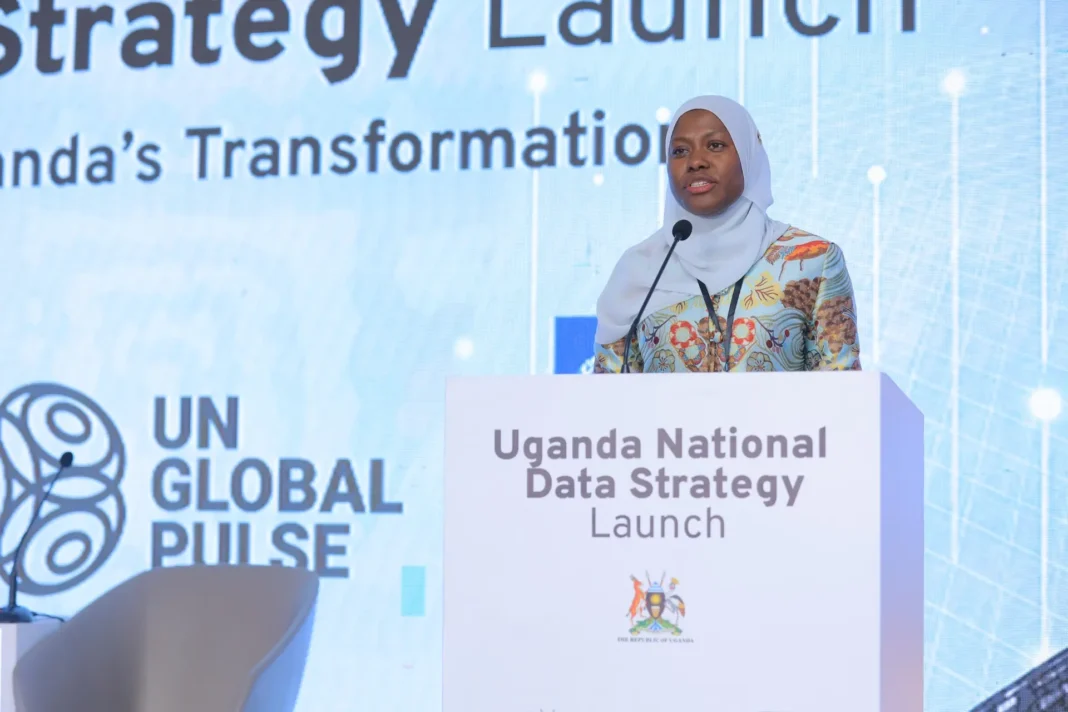
Speaking at the launch, Permanent Secretary at the Ministry of ICT and National Guidance, Dr. Aminah Zawedde, stated that evidence-based figures must drive state allocations and infrastructure distribution.
“If you have the numbers, if you have the data to know how many people are in a community, what distance there is between parishes?…do we need a hospital there to serve the number of people that can accommodate that hospital? Should it be a Health Center III or Health Center IV? all that will be based on data that will inform the decisions for government planning,” Dr. Zawedde stated.
Development partners described structured public data as a foundation for implementing artificial intelligence systems and attaining global development targets.
UNDP Resident Representative Nwanne Vwede-Obahor emphasized the urgency of reliable metrics in tracking key social and economic benchmarks.
“With only four years remaining until 2030, better data is central to the promise of the 2030 agenda and is essential to accelerating progress towards sustainable development goals,” Vwede-Obahor remarked. “This is why the national data strategy matters.”
However, lawmakers cautioned that the transition requires strict data privacy measures and domestic digital infrastructure sovereignty.
Woman MP for Mukono District, Hon. Sheilah Amaniyo, questioned existing overseas storage protocols and citizen privacy protections.
“This has been launched and Ugandans will receive it,” Hon. Amaniyo noted. “But are we going to protect it, is it going to be safe? Because right now I think most of our data is on a certain cloud in America?” she asked.
Chairperson of the Parliamentary Committee on ICT & National Guidance and MP for Omoro County, Hon. Andrew Ojok Oulanyah, warned that high entry costs for consumer hardware will hinder public adoption.
“All this will be meaningless if the users cannot actually access those services,” Hon. Oulanyah cautioned. “And one of the biggest challenges is that the devices are very expensive at the moment, as we’re among the only countries in the original East African Community charging a 10% import duty on entry-level devices.”
Hon. Oulanyah cited regional fiscal models to support his call for tax relief on consumer technology.
“Rwanda experimented and removed the 10% in 2022, and they got an increment of 26% in terms of adoption of ICT services,” he added.
Government officials noted that the operational success of the five-year roadmap will ultimately depend on inter-agency cooperation, affordable digital hardware, and strict enforcement of data protection laws.


